How many solder joints can a soldering tip typically complete under high-temperature, lead-free conditions? What are the cost and time required to replace a soldering tip or protective lens?
Key Findings
Under high-temperature, lead-free conditions using SAC305 at a set temperature of 350–400°C, the special-alloy soldering tips used in these three wire harness soldering machines typically last 30,000–50,000 solder joints.
The basic model, RSE-SSM-2000, has an estimated tip life of 25,000–35,000 joints due to fluctuations in its open-loop temperature control. The higher-end RSM-SSM-200A / 300A models, equipped with PID temperature control and temperature curve monitoring, can extend tip life to 40,000–50,000 joints through faster thermal recovery and reduced temperature overshoot.
An industrial high-frequency soldering tip costs approximately $15–$35 to replace. Mechanical removal and installation alone take 1–2 minutes, while heating and calibration together take 3–5 minutes.
Note: All listed models use contact-type, high-frequency soldering iron systems. Laser soldering protective lenses cost approximately $10–$25 each and have a service life exceeding 500,000 joints. However, the initial equipment investment is approximately 3–5 times that of a soldering iron system.
Soldering tip contact and shape: what to compare
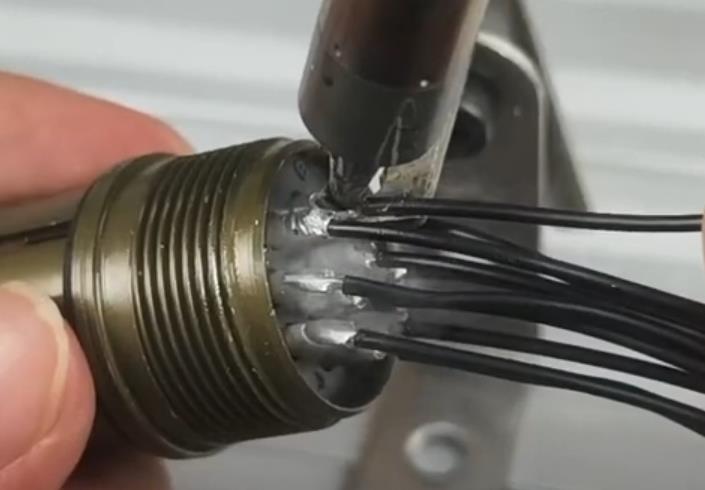
Circular connector: compare the tip working face, terminal access and clearance between adjacent wires.
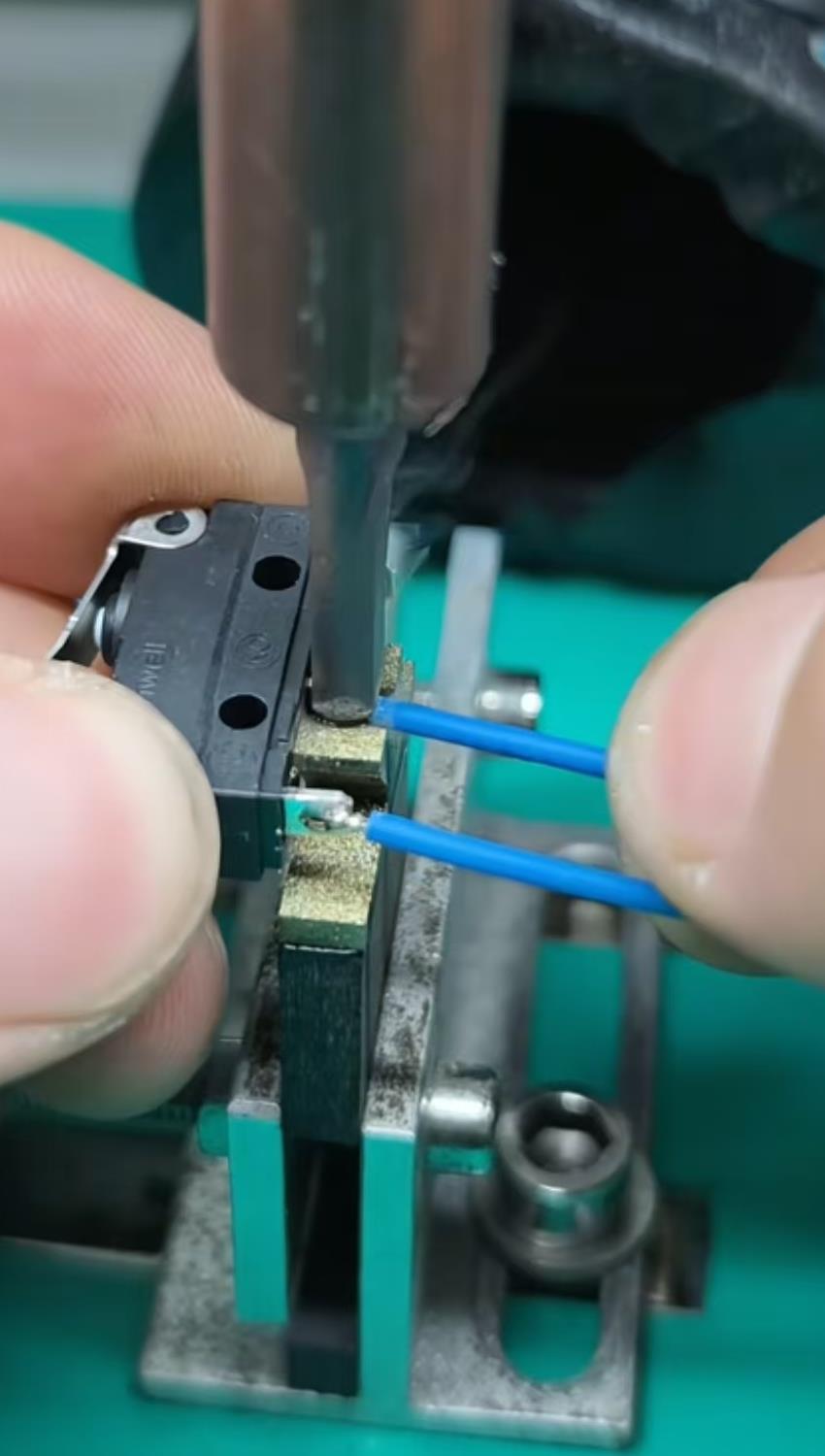
Microswitch terminal: a second contact-soldering example showing the tip working end, terminal and blue wires.
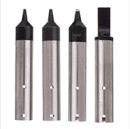
Tip shape examples from the existing soldering product accessories material. Confirm the exact part number and mounting fit before ordering.
When comparing replacement tips, check the working-end profile, mounting dimensions and heater compatibility.
Image sources: user-supplied soldering photographs and existing product accessories material. The application photographs illustrate contact geometry; they do not identify a machine model or establish tip life.
Product Specifications and Consumable Maintenance Cost Comparison
| Key Evaluation Factor | Economy Model: RSE-SSM-2000 | Intelligent Model: RSM-SSM-200A | Advanced Monitoring Model: RSM-SSM-300A |
|---|---|---|---|
| Heating power | 150–200 W, standard high-frequency heating | 400 W, high-frequency induction heating with rapid thermal recovery | 400 W |
| Temperature control mechanism | Rotary knob / digital open-loop setting with basic temperature regulation | Intelligent microcomputer PID closed-loop control with digital monitoring | Intelligent microcomputer PID closed-loop control with real-time temperature curve monitoring |
| Temperature stability and compensation | Relatively delayed compensation, ±5–8°C | Millisecond-level thermal recovery, ±2–3°C | Millisecond-level rapid compensation, within ±2°C, with an overtemperature alarm |
| Lead-free soldering tip life, SAC305 | 25,000–35,000 joints | 35,000–45,000 joints | 40,000–50,000+ joints |
| Consumable cost per soldering tip | Approximately $15–$25 | Approximately $20–$35, customized rapid-heating type | Approximately $20–$35, customized rapid-heating type |
| Replacement time, MTTR | Bolt-mounted design, approximately 3–5 minutes | Plug-in / quick-lock design, approximately 2–3 minutes | Plug-in / quick-lock design, approximately 2–3 minutes |
| Abnormal heating protection | None; relies on manual inspection | Upper / lower solder joint temperature deviation alerts | Soldering temperature waveform abnormality alarm to prevent dry heating and oxidation |
| Applicable wire harness specifications | General consumer electronics harnesses, AWG 20–28 | Multicore wires, Type-C assemblies, and small automotive harnesses | Heavy-gauge harnesses, AWG 12–18, connectors with high heat dissipation, and power cables |
Equipment Selection and Maintenance Checklist
Step 1: Match Machine Power to the Thermal Load of the Wire Gauge
For wires thicker than AWG 18, or soldering terminals with large copper heat dissipation or grounding areas, exclude the RSE-SSM-2000 and select a 400 W-class RSM-SSM-200A or 300A.
This avoids insufficient thermal compensation that may lead operators to manually increase the temperature above 420°C, reducing soldering tip life by more than 50%.
Step 2: Assess Temperature Control Features Against Quality Traceability Requirements
- General non-automotive and non-medical harnesses: Choose the RSE-SSM-2000 to reduce capital expenditure.
- Automotive and industrial control harnesses: Choose the RSM-SSM-300A. Its built-in real-time temperature curve monitoring can automatically trigger an alarm when wear of the tip’s iron plating increases thermal resistance, preventing batches of cold solder joints.
Step 3: Establish a Consumables Budget Based on Total Cost of Ownership
Assume single-shift production of 3,000 wire harness terminals per day, with four solder joints per terminal, resulting in 12,000 joints per day:
- RSE-SSM-2000: One soldering tip requires replacement approximately every 2.5–3 days, with monthly consumable expenditure of approximately $150–$250.
- RSM-SSM-200A / 300A: One soldering tip requires replacement approximately every 4–4.5 days, reducing monthly consumable expenditure by approximately 30% while also reducing replacement-related line stoppages.
Step 4: Establish an On-Site Quick-Change and Maintenance SOP
- Before daily production: Use a soldering tip cleaner to remove carbon deposits. Never use a file or hard metal tool to scrape the tip’s surface plating.
- For changeovers or stoppages exceeding 10 minutes: Activate the machine’s automatic sleep / temperature reduction function to prevent continued flux carbonization and corrosion of the protective layer.
- Spare parts inventory: Maintain a machine-to-spare-tip ratio of 1:3, stocking commonly used geometries such as bevel and knife tips to keep replacement downtime within three minutes.
Related reading: How to Solder a D-sub Connector: Preparation and Inspection · Solder Fume Extraction for Wire Harness Workstations