Measuring, cutting and stripping wire by hand takes time, particularly when the same lengths are needed throughout a batch. An automatic wire cutting and stripping machine combines these operations to reduce repetitive handling and help keep wire preparation consistent.
For wire harness manufacturers and cable assembly businesses, the benefit is practical: more prepared wires ready for the next operation, with less time spent measuring each piece. The right equipment can also help reduce material waste and rework caused by uneven cut or strip lengths.

Introduction
Wire preparation affects the work that follows. A wire cut too short may have to be replaced; an incorrect strip length can make terminal insertion or soldering more difficult. Controlling these details at the preparation stage helps keep assembly moving.
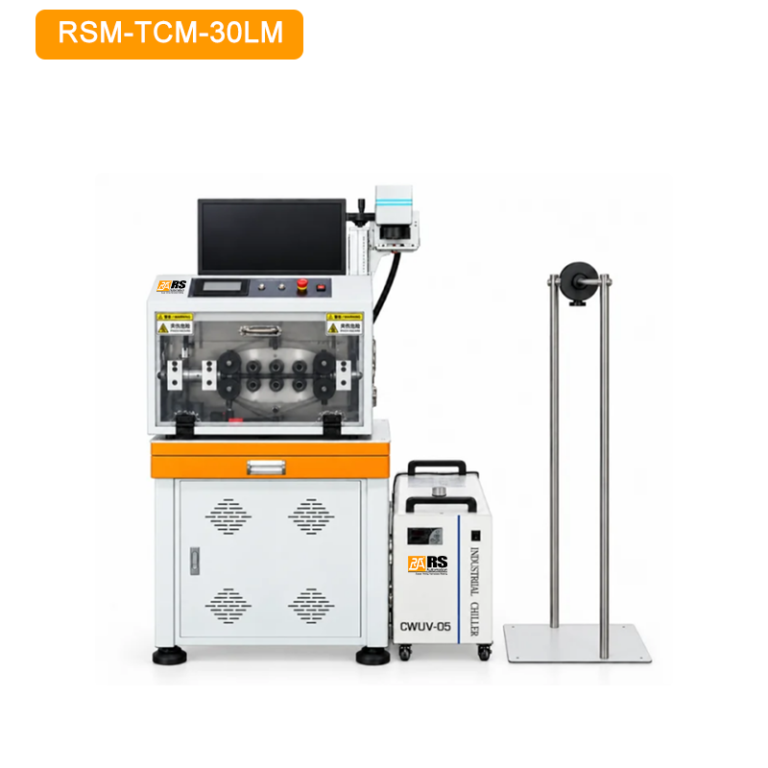
A wire cutting and stripping machine feeds the material, cuts it to the set length and removes insulation at the required ends. Operators set up the job and inspect the first pieces before continuing the batch. RS Automation offers automatic cable cutting and stripping machines as well as models for sheathed cable processing.
Key Features
When comparing machines, start with the wire you actually process. Conductor size, outside diameter, insulation material and the required stripping length all influence machine selection. A cable cutting and stripping machine suitable for one construction may need different tooling or settings for another.
The features that matter in daily production include:
- Controlled wire feeding: helps maintain consistent material movement during cutting and stripping.
- Adjustable cutting and stripping lengths: allows the process to be set for the assembly drawing.
- Stored job settings: makes repeat orders easier to set up, where supported by the model.
- Accessible controls: gives operators a clear way to adjust parameters during changeover.
- Suitable blades and guides: supports clean insulation removal without damaging the conductor when correctly selected and adjusted.
For example, the RSM-WCS-1502R automatic cable cutting and stripping machine is listed with an eight-wheel drive, a 7-inch HMI and memory for 200 groups of settings. These features support feeding and repeat setup; finished samples should still be checked after a material or program change.
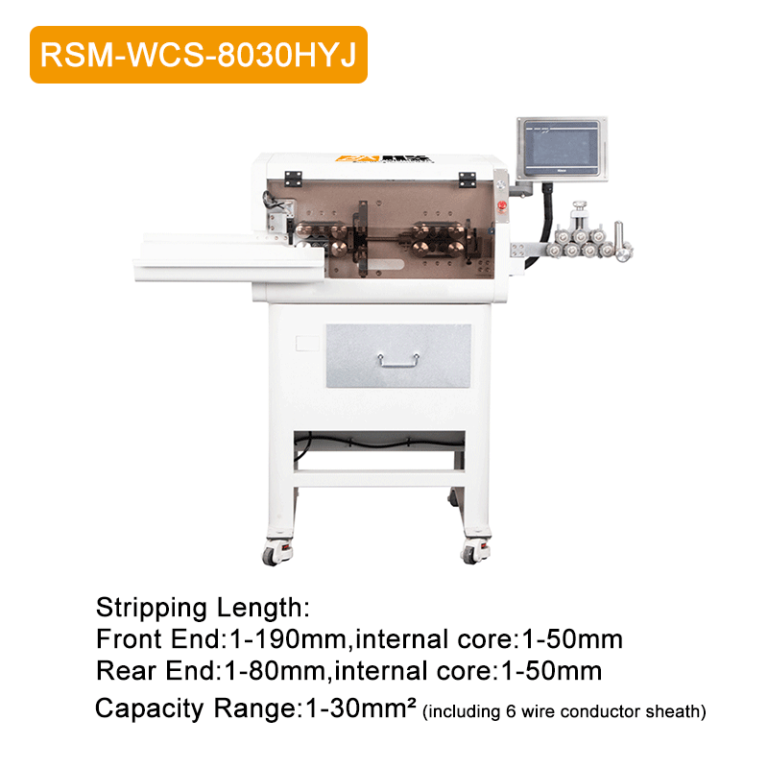
For jacketed cables, consider a sheath cable cutting and stripping machine such as the RSM-WCS-8030HYJ. Confirm the required outer jacket removal and inner-wire preparation with an actual cable sample.
Applications in Industry
Automatic wire cutting and stripping machines are used in wire preparation for automotive harnesses, electrical equipment, electronics and communication cable assemblies. Typical work includes:
- Preparing repeat wire lengths for harness assembly.
- Cutting and stripping leads for control panels and electrical equipment.
- Preparing cable ends for connector assembly.
- Removing cable jackets where supported by the selected machine and tooling.
The finished wire must suit the next operation. For solder-cup connectors, our D-sub connector soldering guide explains how strip length and strand condition affect preparation and inspection. Where harness branches are joined, the guide to ultrasonic wire splicing and process setup covers conductor preparation before welding. These are separate assembly operations, rather than functions included in every cut and strip machine.
Benefits to Businesses
The clearest productivity gain comes from reducing repeated measuring and manual cutting. On repeat batches, an automatic wire cutting and stripping machine can free operators to focus on material supply, inspection and the next assembly step.
Consistent preparation also makes defects easier to spot. Check cut length, stripped length, remaining insulation and conductor condition—not just the number of pieces produced. A stable setup can reduce avoidable scrap, while worn blades or unsuitable feeding pressure can introduce defects even on an automated machine.
Potential business benefits include:
- Higher preparation capacity: less repeated hand work for jobs suited to automatic processing.
- More consistent results: repeatable settings for cut and strip lengths.
- Less waste and rework: better control of preparation errors before assembly.
- Easier repeat orders: stored settings can shorten setup, followed by first-piece inspection.
To assess the return on investment, compare usable pieces per shift, setup time, scrap and labor requirements with your current process. Include normal reel changes and inspection time. This gives a more useful estimate than machine speed alone, especially when production involves frequent short runs.
Conclusion
An automatic wire cutting and stripping machine can improve a repetitive preparation process without making the workflow more complicated. The key is to match the machine to the cable, confirm the finished result and establish settings that operators can repeat.
Explore RS Automation’s wire cutting and stripping machines to compare equipment options. To discuss a suitable model, send our team your cable details, required cut and strip lengths, expected quantity and a drawing or sample of the finished wire.